





At Pinturas MONTÓ, we keep listening to professionals. That is why we have expanded our product range by introducing two new bonding agents: Tack and Grip. These two products are designed to meet the challenges of today’s professional renovation projects, involving highly diverse surfaces, jobs that combine different materials, and results that must be durable and of high quality.
What is a bonding agent and why do you need it?
When you apply a new mortar over a surface—whether to level a floor, render a wall, or plaster a ceiling—the biggest challenge lies in ensuring proper adhesion between the new material and the existing substrate. If that bond is not consistent, the result is always the same: the new material fails to grip, cracks appear, or it peels off. The solution is to use a bonding agent. This product is an adhesive primer applied to the substrate before the new mortar. Its purpose is to create the optimal conditions so that the new material and the existing substrate remain durably bonded together.
In simple terms: it is the intermediate layer between the old substrate and the new one, guaranteeing excellent adhesion between both.
When is it essential to use a bonding agent?
While it is not always mandatory, it is highly recommended — and in some cases, critical to the final outcome — in the following situations:
- New mortar over old mortar: The old surface may be polished or weathered, which reduces the substrate’s natural adhesion.
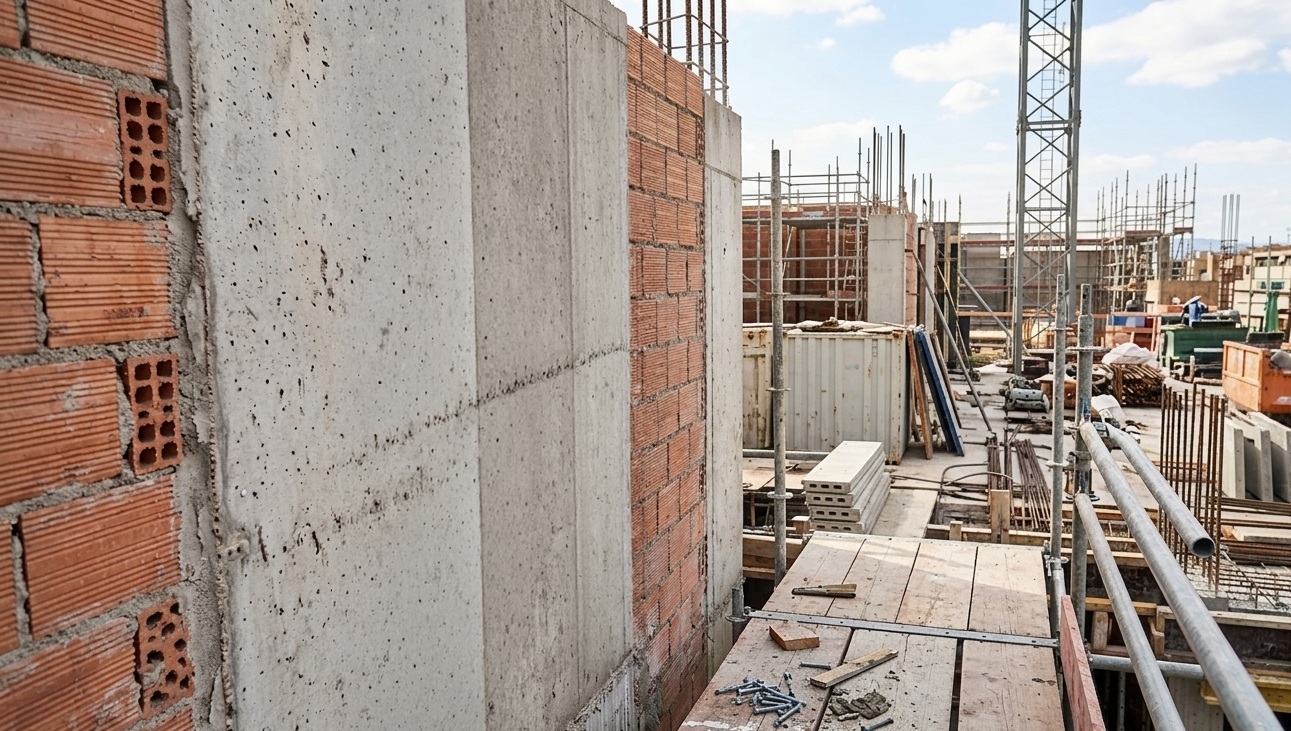
- Plastering and rendering over concrete or brick: These surfaces can be either too smooth or too porous (with excessive absorption) to ensure a direct bond.
- Joints between different materials: For example, where a partition wall meets a pillar, or areas where materials of different natures coexist.
- Non-porous substrates: Ceramics, marble, and polished stone are surfaces that, by their very nature, do not allow mortar to grip without additional assistance.
MONTÓ’s Two Bonding Agents: Tack and Grip
Pinturas MONTÓ incorporates two bonding agents with different technologies into its range. Both are water-based
adhesive primers, easy to apply, and compatible with lime, cement, and plaster mortars. The key difference lies in
the type of substrate they are designed for and their finish after application.
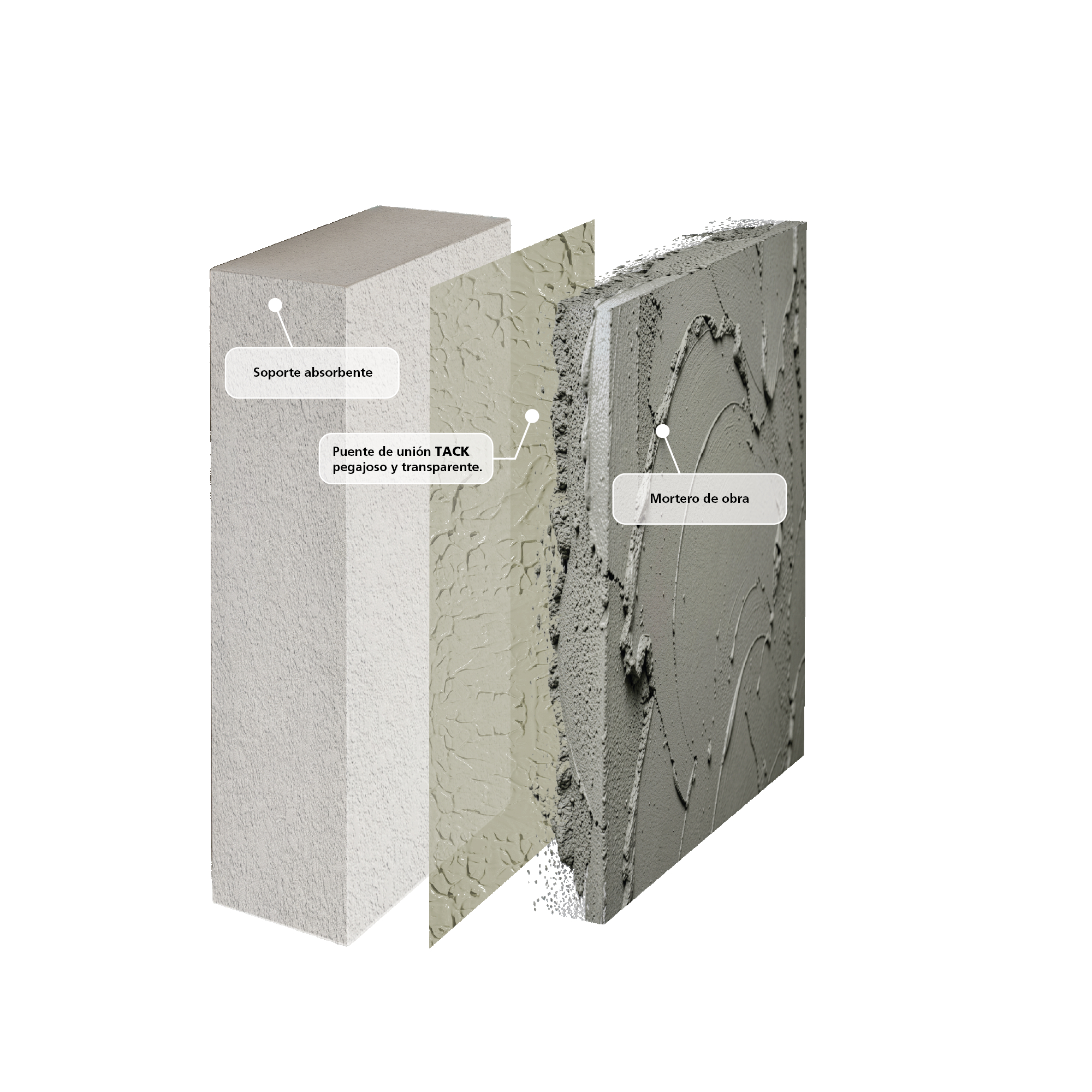
TACK Bonding Agent: For absorbent substrates and applications on walls and ceilings
The Tack Bonding Agent is the solution for jobs where the substrate is porous, meaning the material absorbs water.
Its most prominent feature is its prolonged tacking: an active tackiness that remains over time, creating the
necessary adhesion so that the new mortar is perfectly anchored.
Which substrates does it work on?
- Concrete
- Brick
- Stone
- Fibre cement
- Old construction mortars
- Cement
- Plaster
- Cementitious mortars
- Anhydrite substrates
What kind of work is it designed for?
- Rendering and plastering on walls and ceilings
- Bonding new mortar over old mortar
- Joints between partition walls and pillars
- Application of screed and plastering mortars over brick, stone, or fibre cement
- Screed and plastering mortar over porous substrates
An important clarification: Tack is exclusively designed for walls and ceilings. It is not suitable for floors or structural joints.
GRIP Bonding Agent: For non-absorbent substrates, suitable for walls and floors
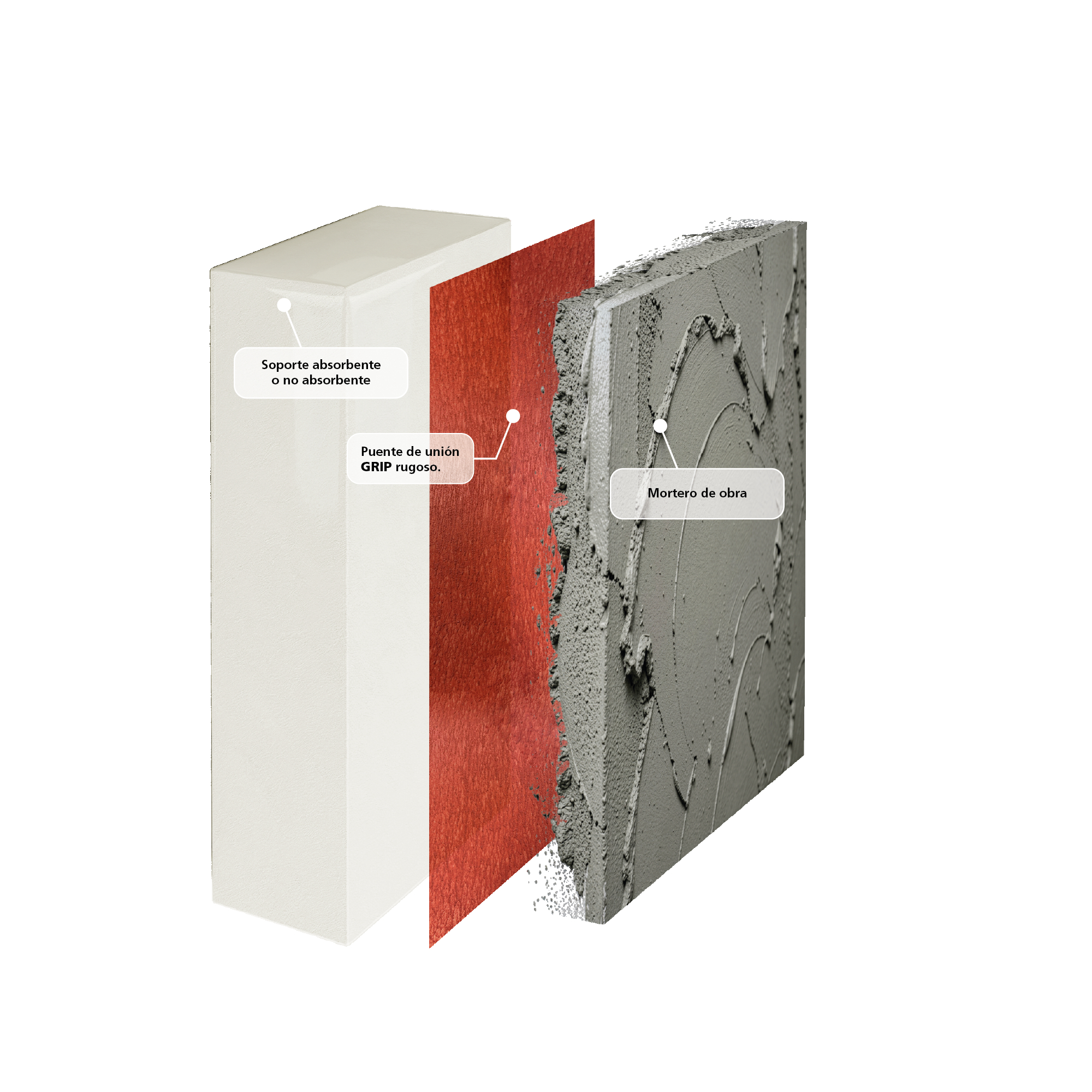
The Grip Bonding Agent expands the scope of action compared to Tack, as it can be applied to smooth or nonporous surfaces as well as absorbent ones. Another key difference is its textured finish: upon application, it creates a rough layer that provides the required adhesion.
It is the ideal solution for renovation work involving materials such as ceramics, marble, or polished stone — scenarios that are increasingly common in full property renovations.
Which substrates does it work on?
- Concrete
- Brick
- Stone
- Ceramics
- Marble
- Old construction mortars
- Cement
- Plaster
- Non-absorbent substrates in generalHormigón
What kind of work is it designed for?
- Rendering and plastering on walls and ceilings
- Bonding new mortar over old mortar
- Application of screed and plastering mortars over non-porous or polished substrates
- Floor works
¿Do you have doubts about which of the two products you need for your next project? Consult our sales department or write to us at sac@montopinturas.com. We are here to help!